
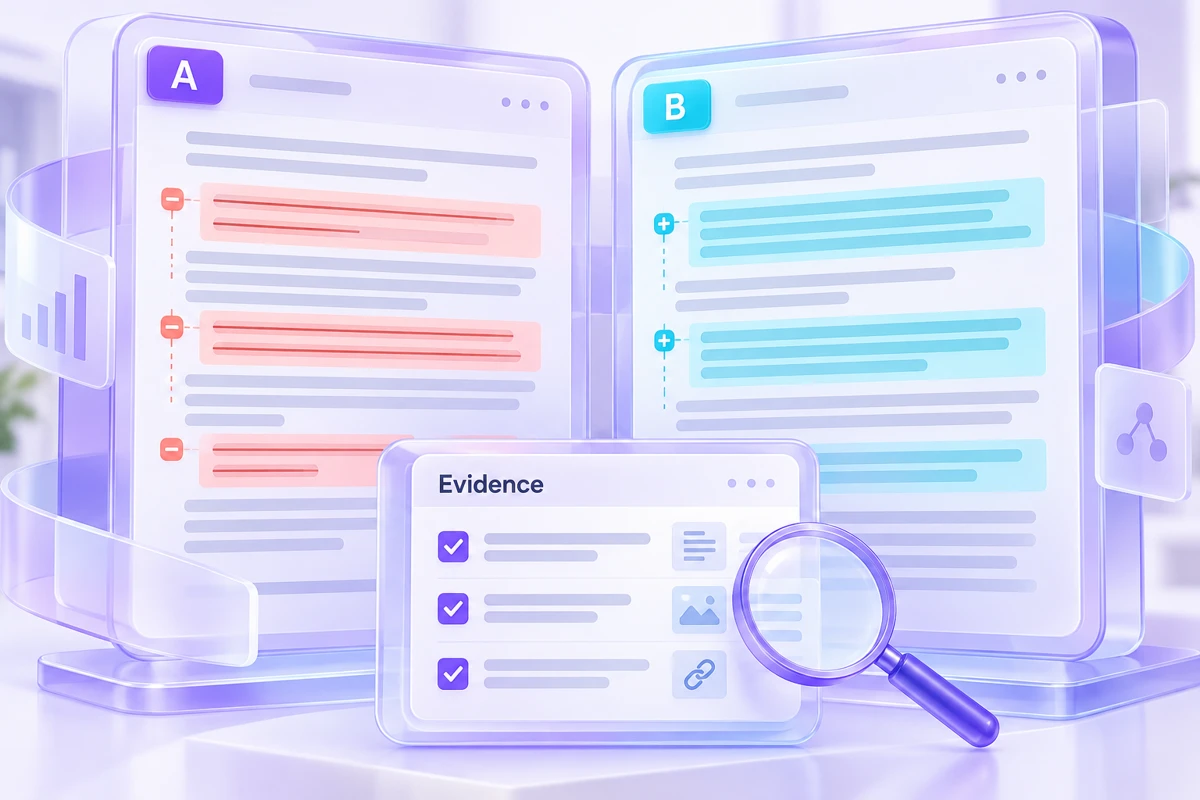
Some AI mistakes are easy to notice because a date or name is visibly wrong. Others arrive as a small extension of a true statement. The answer starts from something the source supports, then adds a likely-sounding reason, promise or conclusion. Checking those extensions is one of the most useful habits you can bring to AI-assisted work.
Look for added certainty Imagine a fictional source note saying a team is investigating a delayed import and will share an update on Friday. An AI draft says the issue will be resolved by Friday. The date came from the source, but its meaning changed from a communication commitment to a repair commitment.
Mark words that describe certainty and completion: will, guaranteed, resolved, always and fully. They are not inherently wrong. They simply deserve a source check because they can make a sentence stronger than the evidence allows.
Separate observation from explanation A source might report that fewer people completed a form after a redesign. That does not establish why. An answer that blames a particular field is adding a causal explanation unless the source contains evidence for it. The explanation may be plausible and still unsupported.
Ask which part of the output is a reported fact, which part is an inference and which part is a suggestion for investigation. Label those categories in your working review. You can keep a useful hypothesis without publishing it as an established cause.
Check the scope of each claim A tool feature described for one plan, language or platform should not become a statement about every user. A successful sample should not become a guarantee about an entire dataset. Watch for phrases that quietly expand the population or situation covered by the source.
For a product article, write the documented feature narrowly and make your recommendation separately. You might say the vendor documents an export route, then suggest opening a representative export in the recipient’s software. That advice does not require pretending every export has been tested.
Inspect omissions as well as additions An answer can stay within the source’s vocabulary while omitting the condition that matters. A refund rule may depend on a request window; a workflow may require approval; a result may apply only to a small sample. Read the source’s exceptions and compare them with the summary.
If an important qualification is missing, repair the output before polishing its style. A longer accurate explanation is preferable to a shorter one that changes what a reader is likely to do.
Use an unknown-answer rule Tell the assistant how to handle information the source does not establish. It can mark the item as unknown, ask a question or list the evidence needed. Then test that behaviour with a deliberately unanswerable question. The tool’s response gives you evidence about the workflow’s limits.
Keep a small record of failures and the checks that caught them. Review the record when changing a prompt or model. The objective is not to make every answer sound hesitant. It is to match the strength and scope of the wording to the evidence, so readers can distinguish what is known from what still needs investigation.
Keep the inputs and review notes together in the response compare workspace, then save a backup you can reopen.